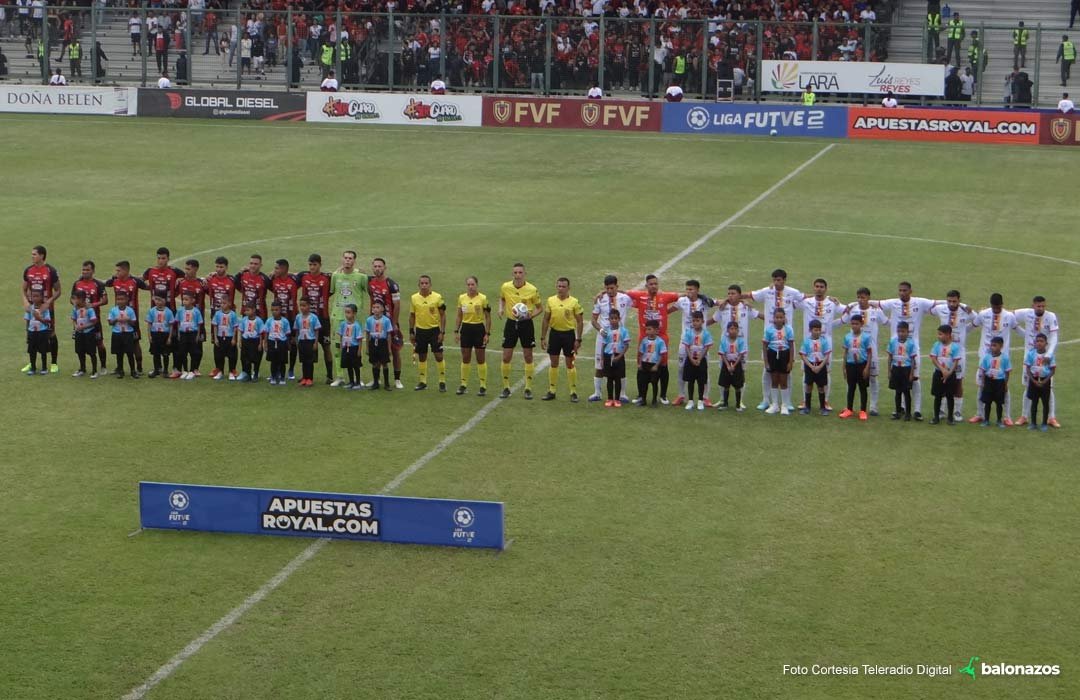
Lara football is at a decisive moment as Deportivo Lara and Barquisimeto SC prepare to contest the Liga FUTVE 2 final. The winner will earn the state’s place in Venezuela’s top flight. The clash comes against a backdrop of sharply contrasting club situations and security concerns that have forced the Venezuelan Football Federation (FVF) and the Liga FUTVE to put order ahead of spectacle.
Deportivo Lara: sporting strength against financial strain
On the pitch, Deportivo Lara are the clear favourites. The club built a squad designed for promotion under coach Chema Morr, a Venezuelan champion who knows the Lara scene well. Morr got the most out of his side in the second half of the season, with young players and experienced figures both making important contributions. After failing to return to the top flight through administrative channels the previous year, the black-and-red side now have the chance to do it on the field.
Off the pitch, however, the club is in a much weaker position. Its financial situation is precarious, and rumours of a possible sale have circulated, some recently amplified by content creators. The club faces a stark choice: earn promotion and attract financial backing, or risk disappearing if it fails.
Its recent record, including a star and a senior title and 15 years of building a following among a generation that knew little of the region’s football past, is set against a troubled history away from the field. The article recounts the departure of the club’s first president over legal issues, a later handover to an administration that was criticised and drove the club into bankruptcy, and a link to Jorge Giménez, who acquired the club before becoming FVF president six years later, without that translating into sustained support for Deportivo Lara.
A serious incident in Barinas
The most serious episode happened recently in Barinas, where members of the club’s organised supporters’ group, Huracán Rojinegro, were involved in the killing of a local fan, despite existing admission bans. The incident led to a sanction requiring the team to play three matches in six days, and the first leg of this final will be played behind closed doors. Concern persists, as sectors linked to the group continue to mobilise without major restrictions.
Barquisimeto SC: organisation and youth
Barquisimeto SC are the youngest project and come into the final without the favourite’s tag. They have no established fan base yet, but aim to build their own identity. The club is led by Ricardo Naim, nephew of Samir Naim, a figure remembered for his investment in football during the 1990s and linked to the former Unión Deportiva Lara, which many regard as the region’s most identifiable club.
Founded only two years ago, Barquisimeto SC have attracted attention with their energy and a young squad built largely on the Academia Rey base. Their closeness to the current federation management has also been discussed in national football circles, as has the role of Gabriel Cíchero. Their message of a “winning mentality” has created more media noise than footballing conviction for a group still maturing.
Where Barquisimeto clearly have the edge is in their corporate structure. The club has a professional press department and organised management channels, in contrast to the uncertain business situation surrounding Deportivo Lara, whose most viable route after any promotion appears to be transferring the franchise to new investors.
Could the whole final be played behind closed doors?
This remains unofficial, based on sources close to the capital, but the possibility that the second leg could also be played without spectators is gaining ground. The reasoning rests on strict preventive criteria: the youth of the Barquisimeto squad and the room for action that sectors of the rival support have maintained, including after the events in Barinas. Authorities are reportedly considering closing the stands entirely to avoid incidents, regardless of how the tie is decided on the pitch.
Source: www.balonazos.com